
General UK.gov warned that digital transformation hype is no substitute for delivery  The Register 6m ago
Parliamentary committee says £45B savings claim risks undermining public sector tech reform rather than helping it

Parliamentary committee says £45B savings claim risks undermining public sector tech reform rather than helping it
The Osbournes announced the development of an AI avatar of the Prince of Darkness earlier this year
What if you could use your knowledge of upcoming release schedules, quiet insider chats with artist teams, your skill at reading Chartmetric data – or anything else in the music business that you were pretty certain about – to place bets?
The pop-punk trio sparked speculation among fans this week after sharing the album's iconic artwork on social media.
The pop-up arrives the same day as Dinner Party's official global release via Capitol Records.
From what she's reading, to favorite lip products and perfume, the country hitmaker tells us what she's bringing on tour this summer.
The newly announced run kicks off in Canberra on Oct. 22.
The Sept. 26 show will also feature Willie Nelson, Dave Matthews, John Mellencamp, Margo Price, and Jesse Welles
Board members Nelson, Neil Young, John Mellencamp, Dave Matthews and more will headline the event.
The star performed "Bodega Baddie" and "Bodak Yellow" during the hard-hitting set
The event announcement comes following Horan's revelation that he'll be returning to Australia in early 2027.
Once she wrapped up her 3-minute-plus set, Cardi settled into courtside seats underneath the basket with 4-year-old son Wave.
The iconic group will perform in the country's main public square as part of the FIFA Fan Fest on Thursday.
The event will bring together the three cities hosting the first match for each host country on June 10.

The star athlete and FANTASTICS member talk to Billboard Japan ahead of the 2026 World Cup.
But will it work? Apple presentations are not the must see TV they were in the Steve Jobs era, if for no other reason than the lack of…one more thing… But those presentations were live, ever since Covid, Apple prerecords, which eliminates mistakes, but sucks the life out of the presentation.

Apple Intelligence stumbled through 2024 and 2025. It's starting to look respectable
Toy giant MGA wants to block any debate over how “OMG” ended up in its doll line’s name, but the judge signaled Monday he'll allow it

When an unsolicited job offer sounds too good to be true …

In the acclaimed revival of “Brigadoon” now playing at Pasadena Playhouse, Tyne Daly is by far the marquee name, as the “Cagney & Lacey” star appears as the Widow Lundie, a role that got a gender switch from the character’s original incarnation as a Mr. Lundie.

The new features ignore the argument that if parents wanted to spend more time on their kids, they wouldn't have supplied them with an iPad or iPhone in the first place.

Two former top antitrust attorneys at the U.S. Department of Justice who were central to its case against Live Nation and Ticketmaster had strong words for the department following its abrupt settlement with the company just one week after the trial — which saw the DOJ and over 30 states accusing...
Last month, Spotify hosted PURE FLOWERS LIVE, a special event celebrating the release of LE SSERAFIM’s second studio album, ‘PUREFLOW’, pt. 1. Held at the Seosomun Shrine History Museum in Seoul, the show gave 300 of the K-Pop group’s top fans a chance to experience the new songs live before the...
Cage the Elephant, Mod Sun, New Translations, and more Nashville-based alt bands descended on Broadway for the anti-CMA Fest
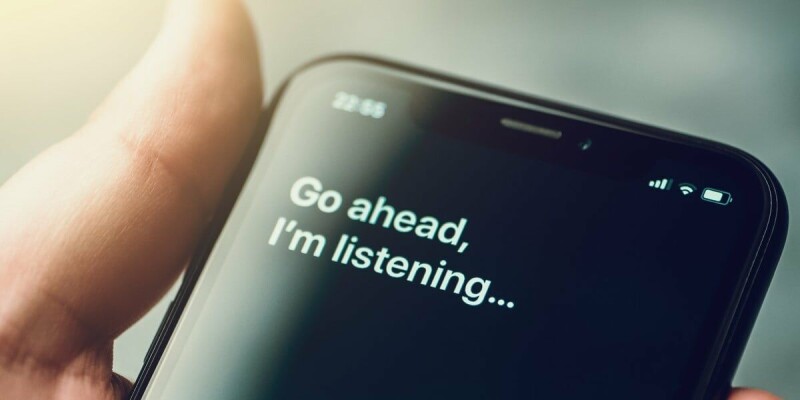
WWDC announcements earned tempered praise from analysts, with an emphasis on the word 'if'

The AI boom may not be a technology story at all—it may be a forecasting story. As trillions flow into data centers, power infrastructure, and transmission lines, the real risk is not whether AI works, but whether demand arrives before the capital structure collapses.
1 Klaus Meine is intelligent and articulate. So if you listen to the “Wind of Change” podcast, and I recommend that you do, they eventually confront Klaus Meine regarding the CIA’s theoretical participation in the creation of the Scorpions song.
Plus fireside chat recognizing 250 years of American music, special performance of songs from FROZEN by Caroline Bowman (Elsa in North American Touring Production) and surprise appearance by Mickey Mouse in patriotic attire WASHINGTON, DC – Accolades continued for the newly-minted RIAA Honors’...

Ariana Grande has earned her 10th single to hit No. 1 on the Billboard Hot 100 as “Hate That I Made You Love Me” bows atop the chart. The song marks her eighth debut at No. 1 on the singles chart and ties her with Taylor Swift for the most among women. Grande produced and […]
The deal was announced on Monday (June 8) at UMGC's inaugural China Summit in Beijing. Source
Brandon Curiel, who goes by the stage name Brandon Bill$, had sued DaBaby back in February 2022 over the bowling alley brawl

Scumbags, including a Qilin ransomware affiliate, began hitting this hole May 7
The decision reopens the question of how much of the material that Udio has designated confidential will stay off the public docket. Source

Sandboxed LLM dev environments lead the show, but accessibility may be the real prize

PARTNER CONTENT: Driving Grid Modernization and Energy Transition in Malaysia Through Advanced AI and Smart Infrastructure Solutions
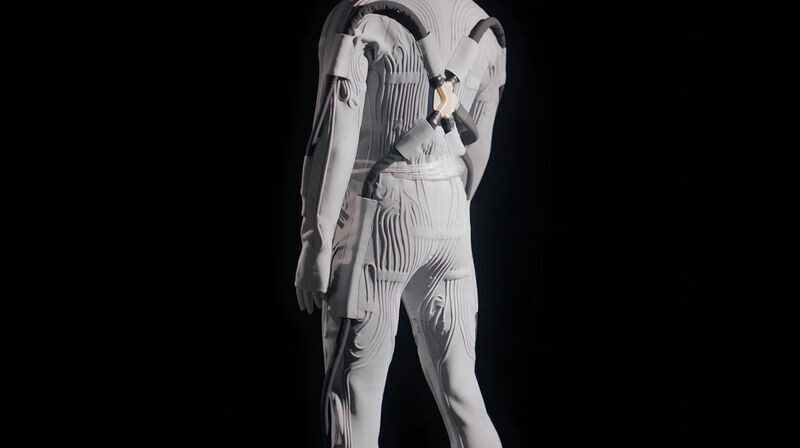
What, you think any old liquid-cooled bodysuit would be acceptable to pair with such a fashionable outer layer?
The Darcos bill would reverse the burden of proof in AI copyright disputes in France Source
New agreement with Zhang and his Planet Culture label extends across music, live business and strategic development. Source

Meanwhile, 13 schools in Wales affected by separate attack
Review: 'Wonka' — A Shockingly Good Modern Musical My low expectations for Paul King's 2023 film were blown out of the water I think that you ...
Monica Corton, a music publishing veteran and the founder of Go To Eleven Entertainment, talks about AI — and to the industry’s one great hope for deciding who actually gets paid when machines make music… Source

Orbital broadband biz will miss its July 30 deadline to have 1,616 spacecraft in place

Warp is looking for a social-first creative to join our team in London, helping bring our Artists’ stories to life across digital platforms. You’ll be a creative all rounder and […] The post is from Music Ally.

Following a sold-out acoustic show at New York City’s Madison Square Garden last Thursday and a tour announcement the next day, Phoebe Bridgers has added more dates to “The Lost Tour” for 2026.

After a trial claimed chatbot saved staff 43 minutes a day, NHS England has decided it's time to supersize the experiment
The Grammy winner was killed in a stabbing in East London on June 5, with an investigation still ongoing
Joining Charli XCX on the fall tour will be singer-songwriter underscores, with tour stops in Brooklyn, Washington DC, Austin and Los Angeles

Miasma worm shapeshifts, but cloud secret-scouting remains the goal
UK-based startup Cantilever has raised £250k of pre-seed funding from a group of 20 independent labels and individuals from those companies.
The American Federation of Musicians claim the two companies licensed recordings made by its members to Suno and Udio without crediting the musicians. Source
The Paris Commitment urges governments, tech firms and cultural industries to ensure human creators remain protected and fairly remunerated in the AI era. Source
The Supreme Court’s solo foray into copyright this term, Cox v. Sony, has shaken up the landscape of secondary liability. In its wake, a growing chorus of voices have noted that direct liability under copyright law needs a fresh look, particularly the doctrine of volitional conduct.
US-based musicians’ union the American Federation of Musicians (AFM) has launched a lawsuit against UMG and WMG over their AI deals.

Charli xcx is going back on tour this fall to promote her upcoming seventh studio album, “Music, Fashion, Film.” The 12-date North American arena tour kicks off in Philadelphia, Penn. on Sept. 11 and includes two nights at both Brooklyn’s Barclays Center and Los Angeles’ Kia Forum.
The podcast starring modern Native and Indigenous artists including The Halluci Nation, THRONE, Raye Zaragoza, Shawnee Kish, Aysanabee, Fawn Wood, and more premieres June 22

No new features to be submitted to main branch, existing code removed in 6 months if new proposal not created and accepted
News follows UMG's recent rejection of a $64 billion takeover bid from Bill Ackman's Pershing Square Source

Zuckercorp says surveillance-for-hire vendor was still running phishing operations after federal court told it to knock it off
Spotify has already begun adding footage from live events, including a Dua Lipa show in Mexico City, Bloomberg reported. Source

Guns N’ Roses will return to India for two concerts in November, touching down in Bengaluru and Guwahati as part of the Asia leg of their ongoing world tour. The shows, produced and promoted by BookMyShow Live, will take place at Nice Grounds in Bengaluru on Nov.
Last week, Abbey Road REDD Labs presented its latest showcase of music-tech startups at SXSW London, in a ‘Studio Four’ event.

The victor of the next season of “The Voice” already has a major gig booked. Whoever wins Season 30 of the NBC singing competition will get to perform on the main stage at the Governors Ball music festival in 2027, thanks to a partnership between Live Nation Studios, the festival and “The Voice.”...
London’s Roundhouse venue in Camden is well known for its concerts, but its work as a youth-arts charity is just as key of its business.

Global Talent visa program aims to draw in dissatisfied scientists from countries including the US
Suno argued that granting the labels' request would deny the company a timely ruling on whether training its AI model on copyrighted music is fair use. Source
Acting in games – voice but also motion-capture and likeness – is a growing opportunity for actors. Tupac Shakur included, despite being dead.

Policy-holders increasingly turn fender benders into much more by sprinkling in their favorite AI chatbots, Aviva says
Universal Music Group agreed to divest (sell) Downtown Music subsidiary Curve Royalty Systems. Now we know the buyers.
Two of the companies working on the infrastructure of digital music-marketing have announced a partnership: Feature·fm and SonoSuite.
The British music industry is mourning one of its most important pillars. Kanya King CBE, founder and CEO of the MOBO awards, died last week.

Whitehall says Work Assistant will help jobseekers apply around the clock – provided employers don't mind machine-written applications
When a community came together after Red Hat said Windows was 'probably the right product'

International artist Samuel has released “Samuelito,” a four-track album merging Latin rhythm, reggaeton energy, and the performance-driven aesthetic he developed during his career in Korea.
The reworked Moulin Rouge musical number also featured Lea Michele, Dylan Mulvaney, June Squibb, and Shoshana Bean
At Spotify, our commitment to the LGBTQIA+ community is year-round. Through GLOW, our global music program, we celebrate and amplify the contributions of queer creators—because when artists are free to be themselves, more voices are heard, more stories are told, and culture moves forward.
Parachord is a one-person hobby project. I build all of it for fun and love: the desktop app, the Android app, the iOS app (I just started) and Achordion, the companion website to it all. All of it is open-source, none of it earns money, and I pay for all...

One hates to prioritize one artform over another… really, one does. But after seeing Ariana Grande’s opening show on her “Eternal Sunshine Tour” at the Oakland Arena Saturday night, it is tempting to want to send the multi-hyphenate talent a message, if you had the means to get one through, and it...

It was anything but June gloom when the Gotham Television Awards kicked off the month in New York City. Winners and honorees included Chase Infiniti, Michelle Pfeiffer, Kerry Washington, “I Love LA” and “Love Story: John F. Kennedy Jr. & Carolyn Bessette.” In London, Variety launched its London...

Benn refuses to be pigeon holed. | Image: Benn Jordan Benn Jordan may have initially gained notoriety for his music as Flashbulb and later, reviewing synths and effects pedals on YouTube under Benn and Gear. But about five years ago, Benn decided to take his YouTube channel in a different...
Tune in June 6th to Faction Talk, channel 103, at 4 PM East, 1 PM West. Phone #: 844-686-5863 If you miss the episode, you can hear it on demand on the SiriusXM app. Search: Lefsetz
1 So I’m listening to this podcast episode about Doc McGhee’s 1989 Moscow Music Peace Festival and I’m getting extremely frustrated. Because the narrator was leaving out the most salient point, that Doc was doing this as a give back to the government for not going to jail on smuggling charges.
RIAA Honors’ Artist of a Lifetime Tallies the Most Albums in Gold & Platinum History at 200M, And Stands as the Only Artist to Ever Earn 10 Diamond Album Certifications WASHINGTON, DC – The Recording Industry Association of America® (RIAA) partnered with the National Archives Foundation to present...
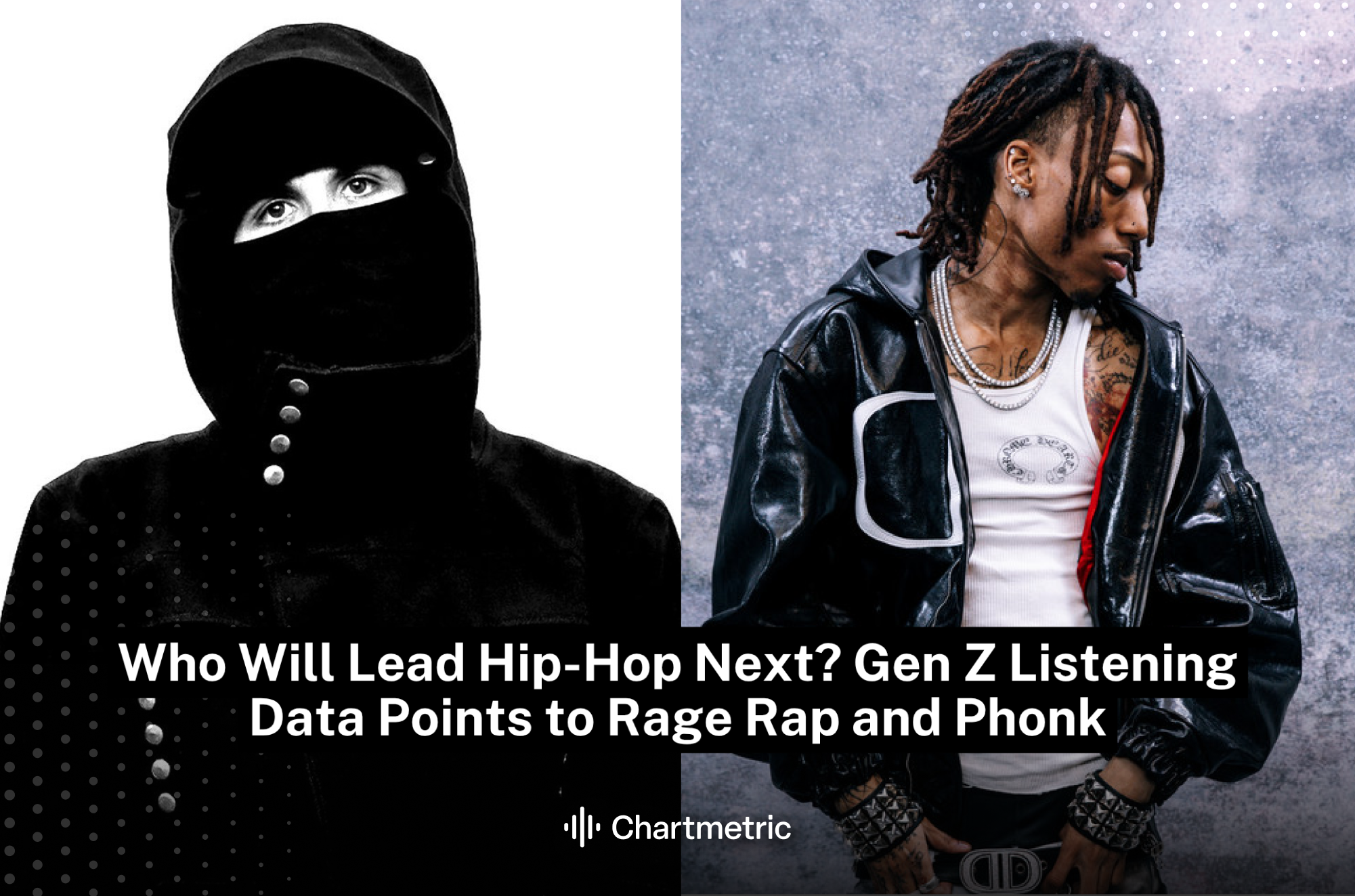
As mainstream rap shows signs of slowing, the search for hip-hop's next leaders has intensified. The answer may not come from where the industry has typically looked.

Average tour earnings down 45%, with nearly three-fifths of musicians saying touring in Europe is no longer viable More than a quarter of British musicians have lost all their work in the European Union since 2021, according to new research.
Universal Music Group has been making a number of moves in south-east Asia recently. The latest is a partnership with S1 in Thailand.
News publishers take fight over copyright of embedded content to Fifth Circuit — The Fifth Circuit heard oral arguments this week in a dispute between a local news publisher and an online news aggregator over alleged public display of news articles on the aggregator’s app.
Thai pop has been quickly gaining worldwide momentum, thanks to fandom culture as a growth driver. With an expected T-pop label collective revenue of Bt11 bil (£250 mil) for 2026 and 13Bt (£295 mil) projected for 2029, the genre has been upsurging, recovering from pandemic levels with the help of...
After a round of testing with selected users, Threads has launched a music stickers feature which allows creators to include 30-second song clips in both posts and replies through streaming services.
In mid-May, Amazon Prime Video launched the first season of their new show Off Campus, which instantly became a global hit. The series reached 36 mil viewers in its first 12 days, becoming the platform’s third biggest debut series ever.
Our latest Sandbox explores the under-16 youth social media bans, first introduced by Australia this past December. A growing number of countries have followed suit, with Indonesia, Brazil, and, as of June 1, Malaysia all now requiring social media platforms to implement similar age verification...
The genie in the story has been waiting centuries for this moment, for the deliciously fiendish opportunity to allegorize generative AI. LLMs need not be malevolent, they need only their definitional inhumanity, and with it the coiled potential for unintended consequences if the intention we mean...
Event’s Fifth Edition Highlights Unifying Power of Music, in Partnership with Billboard WASHINGTON, DC – Common ground can be hard to find in DC, but music often changes that tune.
K-pop has had a banner year, with the genre earning multiple Grammy nominations,along with the massive success of Kpop Demon Hunters . As K-pop’s dedicated fans dominate the global stage, they are often seen as the definition of “superfans”, with artists and labels chasing similar levels of fa...

On this week’s podcast episode, Elliot Easton, guitarist for The Cars and Creedence Clearwater Revisited, takes us through his journey with the band and beyond.
The infrastructure of entertainment consumption has never felt more feudalistic. Distribution, discovery, and monetisation increasingly operate through a small number of platforms that shape how audiences find, consume, and pay for content. Source
The rise of generative AI in music raises significant legal and logistical challenges for music supervisors, including issues of authorship, rights management, and increased piracy risks, complicating traditional licensing processes.

Hack your DAW. | Image: Ableton Ableton already has Max for Live, which allows users to build MIDI effects, synths, and samplers for its digital audio workstation (DAW). But now with its Extensions SDK, features can be added to Ableton Live with common JavaScript.